Research Deck · September 2026
The Hidden EV Economy of India
Beyond cars, batteries and chargers: the back-end businesses powering the EV boom.
Deepak Gupta
Mentor · LearnAItech
The Big Myth
What everyone pictures is only the tip of the iceberg
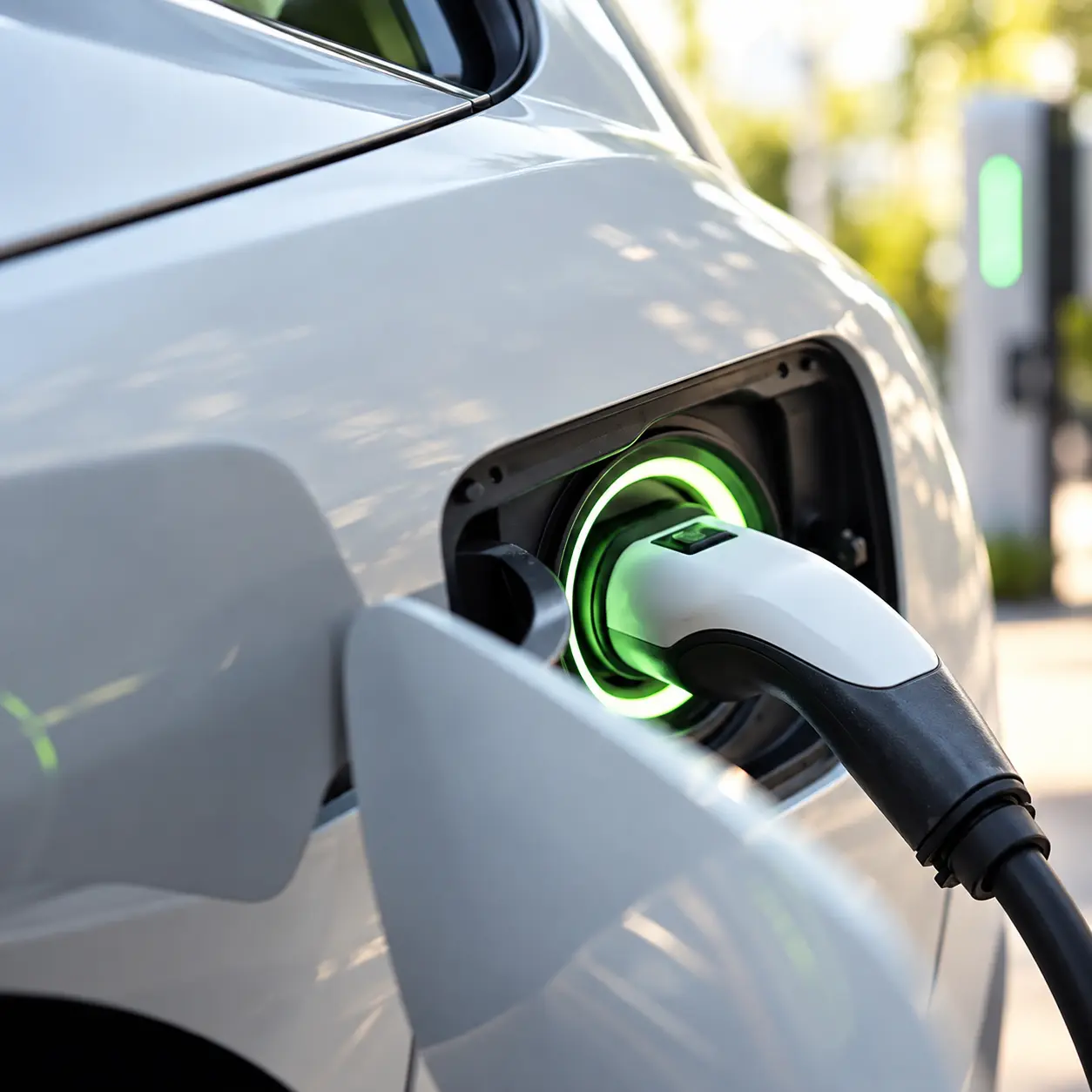
When people hear “EV business,” they instinctively picture the same three things: EV cars, batteries, and chargers. These are the visible, headline-grabbing segments that attract venture capital, media coverage, and policy attention. But they represent only the visible tip of the iceberg.
What People See
- EV cars and two-wheelers
- Battery packs and cells
- Public charging stations
The Reality Beneath
Behind every EV sits a dense stack of manufacturing, services, finance, software, compliance, and recycling businesses. Most of them are B2B, unglamorous, and chronically under-served - and that is precisely where the steady, defensible money lies. These back-end layers are less competed, more recurring, and structurally necessary regardless of which EV brand wins.
The Market
India EV Market: FY2026 Snapshot
India's electric vehicle market has crossed a decisive threshold. FY2026 delivered 24.5 lakh EVs sold - a 25% year-on-year increase - as EV penetration reached 8.27% of all new vehicles sold across the country. Every segment posted an all-time high simultaneously: two-wheelers, three-wheelers, passenger cars, and commercial vehicles.
24.5L
EVs Sold FY2026
Up 25% year on year, a new annual record
8.27%
EV Penetration
Of all 29.6 million new vehicles sold in India
2.8L
March 2026 Units
Best single month ever recorded in Indian EV history
54%
YoY Growth Aug 2026
3.0 lakh registrations; CY2026 already ~22 lakh units till August
Segment Mix
Where the Volume Actually Is
The popular narrative centres on electric passenger cars. The data tells a fundamentally different story. India's EV revolution is a two-wheeler and three-wheeler story - driven by daily-use, income-generating vehicles in semi-urban and rural India, not aspirational consumer purchases in metros.
- Electric 2-Wheelers57%
- Electric 3-Wheelers34%
- Electric Cars (PV)8%
- Electric Commercial Vehicles1%
Key Structural Insights
- 61% of all 3-wheelers sold in India are now electric - a segment that has effectively transitioned
- The e-3W segment has ~700 manufacturers, mostly small, regional, and deeply underserved by organised suppliers
- Uttar Pradesh is the #1 EV state, accounting for 14% of 2026 registrations, ahead of Maharashtra and Karnataka
- The biggest back-end opportunities serve scooters, e-rickshaws and cargo 3Ws in Tier-2/3 India - not luxury EVs in Bengaluru
Policy
The Policy Shift: Subsidy Money Is Moving
The PM E-DRIVE scheme (₹10,900 crore), now extended to March 2028, marks a deliberate pivot in India's EV policy architecture. Purchase subsidies for e-2Ws and e-3Ws are being wound down - the government's position is that segments that have crossed 10% EV penetration no longer require demand incentives to survive. Capital is being redirected upstream and into infrastructure.
e-Truck Incentive
₹5,000 per kWh or up to 10% of ex-factory price, linked to vehicle scrapping - designed to accelerate fleet electrification in logistics.
Charging Infrastructure
₹2,000 crore allocated for 22,100 fast chargers for cars, 1,800 for buses, and 48,400 for 2W/3W - a massive public tender pipeline.
The Strategic Implication
The 2W/3W market must now survive on unit economics, not subsidies. Businesses that cut cost, extend battery life, or reduce financial risk become structurally more valuable in this environment.
The Framework
Think of EV as an Ecosystem, Not a Product
The EV economy has eight distinct operating layers. Each layer represents a cluster of B2B businesses, supply chains, and service markets. Cars, batteries, and chargers cover only Layer 3 and a fraction of Layer 4. The remaining six layers - spanning materials, finance, data, service, and recycling - are where structural gaps and untapped opportunity concentrate.
Materials & Rare-Earth Magnets
The hidden chokepoint inside every EV motor
India currently imports 100% of its sintered NdFeB magnets - the permanent magnets at the heart of every BLDC motor used in e-2Ws and e-3Ws. China controls 85–92% of global magnet production, and its 2025 export curbs directly caused production halts at Indian OEMs. In e-2Ws, magnets account for roughly 30% of motor cost (motors run ₹8,000–15,000 per unit). SIAM has formally requested delays to traction-motor localisation deadlines, from September 2026 to April 2027, reflecting the severity of the supply shock.
Government Response
A ₹7,280 crore scheme targets 6,000 tonnes per year of integrated domestic magnet capacity. Rare-earth mining corridors are being developed in Odisha, Kerala, Andhra Pradesh, and Tamil Nadu to reduce import dependency over a 5–7 year horizon.
Hidden Opportunities
- Magnet recovery from scrap motors and e-waste streams
- Rare-earth-free motor designs: ferrite, induction, and switched reluctance
- Magnet assembly and rotor sub-assembly for domestic motor makers
Components - Where MSMEs Fit Best
Component localisation across India's EV supply chain is highly uneven. Structural parts, wiring harnesses, and thermal systems are largely domesticated. Electronics, chips, magnets, and precision-machined parts remain import-dependent. Less than 10% of the ₹25,938 crore PLI-Auto budget had been disbursed by early 2026 - meeting domestic value-addition thresholds is proving harder than OEMs anticipated.
High Localisation ✓
- Chassis and structural parts
- Wiring harnesses
- Thermal management systems
- Sheet metal and body panels
Low Localisation ✗
- Power electronics and chips
- Permanent magnets
- Battery cells and cell chemistry
- Precision sensors and actuators
The MSME Entry Strategy
OEMs actively want Indian suppliers but few MSMEs possess the quality management systems to qualify. The proven path: start with simple parts, earn OEM approval, then climb to complex assemblies over 18–36 months.
Where to Start
Small-Scale Manufacturing: 12 Units You Can Actually Start
The following product categories represent viable entry points for small and medium manufacturers targeting India's EV supply chain. Capital requirements range from low to medium - precise figures require a detailed project report, but these categories have established demand, identifiable buyers, and manageable technology barriers.
| # | Product | Main Buyer | Capital Band |
|---|---|---|---|
| 1 | Wiring harnesses & HV connectors | 2W/3W OEMs | Low–Medium |
| 2 | Battery packs for e-rickshaws & inverters | E-rickshaw owners, dealers | Medium |
| 3 | BMS boards (assembly & testing) | Pack makers | Medium |
| 4 | Portable / onboard chargers for 2W & 3W | OEMs, aftermarket | Medium |
| 5 | Motor stators, laminations, windings | Motor makers | Medium |
| 6 | Motor controllers | 3W OEMs, retrofitters | Medium |
| 7 | Battery enclosures & sheet-metal trays | Pack makers | Low–Medium |
| 8 | Thermal pads, cooling plates | Pack makers | Low–Medium |
| 9 | E-rickshaw & cargo bodies, chassis | Local assemblers | Low |
| 10 | Charging cables, guns, connectors | CPOs, OEMs | Low–Medium |
| 11 | DC-DC converters, lighting, dashboards | OEMs | Medium |
| 12 | Battery fire-suppression units | Fleets, depots, swap stations | Low–Medium |
Battery Pack Assembly: The Biggest Mid-Size Play
India currently has approximately 60 GWh of battery pack assembly capacity but only ~1 GWh of domestic cell manufacturing as of end-2025. The gap is filled by imports: roughly 75% of EV batteries are sourced from China, with the import bill growing eightfold to over $3 billion by FY2025. Battery cell demand is projected to surge from 28 GWh in 2025 to ~272 GWh by FY2030, a 36.5% CAGR - creating a structural demand floor for pack assemblers regardless of which cells win the chemistry race.
Battery Cell Demand (GWh)
Why Packs Work for Small Players
The business model is capital-efficient: cells are imported, and the real value-add lies in BMS integration, thermal design, enclosure engineering, and testing protocols - all achievable at medium scale.
- Demand spans EVs, inverters, solar storage, and telecom towers
- 40% of demand is already from stationary storage, not vehicles
- Grid storage requirement projected at 236 GWh by 2031-32 (CEA)
- Multiple customer verticals reduce concentration risk
Charging - the Business Behind the Plug
India's public charging network is deeply inadequate relative to the fleet it must serve. As of March 2026, 27,737 public chargers are registered, but only 22,753 are operational - an 18% non-functionality rate. The charger-to-EV ratio stands at 1:235, against a global benchmark of 1:6 to 1:20. Average utilisation remains below 25%, making many charging sites economically unviable for owners. Reaching 30% EV penetration by 2030 may require ~13 lakh public chargers (ORF), implying a 57x expansion in four years.
Charger O&M and AMC
With ~18% of chargers non-functional, annual maintenance contracts represent an immediate, recurring revenue stream with low capital entry.
DISCOM Liaison Services
Grid connection delays are the #1 pain point for CPOs. Experienced navigators who expedite load approvals command premium fees.
Site-Host Aggregation
Matching land owners - dhabas, malls, housing societies - with CPO operators. A pure-play brokerage and management model.
Charge-Point Management Software
Uptime monitoring, remote diagnostics, billing integration, and utilisation analytics for CPOs managing distributed networks.
Battery Swapping & the E-Rickshaw Opportunity
The e-rickshaw segment represents one of India's most structurally compelling but least served EV markets. Lead-acid still powered ~71% of e-3Ws sold in 2025, and an estimated 47 lakh lead-acid e-rickshaws are entering battery replacement cycles between 2026 and 2028. This is not a future opportunity - it is an active, immediate demand wave hitting the market right now.
The Structural Gap
87.5% of e-3Ws are owned by individual drivers, not organised fleets. East India - Kolkata, Bihar, Odisha - has the densest e-rickshaw clusters in the country, yet almost no organised swap or leasing networks exist there. This is a textbook market gap: high demand, low supply, and no dominant incumbent.
Hidden Businesses
- Lead-acid to lithium conversion kits and retrofit services
- Battery leasing on monthly subscription plans
- Swap stations in under-served Tier-2/3 cities
- Lead-acid buyback and scientific disposal networks
Finance - the Real Bottleneck
Capital access is the single largest constraint on EV adoption among commercial operators. Commercial EV borrowers pay 15–33% interest rates - rates that reflect lenders' deep uncertainty about residual values, not creditworthiness. Banks that financed early e-rickshaw fleets suffered significant losses when repossessed vehicles had negligible resale value, and this institutional memory has made the sector risk-averse. Over 50% of e-rickshaw drivers rent their vehicles daily because no affordable loan product exists for them.
Battery-as-a-Service
Separate battery ownership from vehicle ownership. Drivers pay a monthly fee; the BaaS operator retains and manages the asset.
Residual-Value Guarantees
Third-party guarantors that underwrite used-EV resale prices - unlocking conventional bank lending at normal interest rates.
Co-Lending Partnerships
NBFCs with sector knowledge partnering with fintechs for credit scoring and disbursement at scale in Tier-2/3 markets.
Battery-Specific Insurance
Extended warranties and insurance products priced on actual battery health data, not broad actuarial assumptions.
Repossession & Resale Platforms
Organised marketplaces for financed EVs with verified battery health reports - creating a functioning secondary market.
Data, Battery Health & Traceability
Battery Pack Aadhaar Is Coming
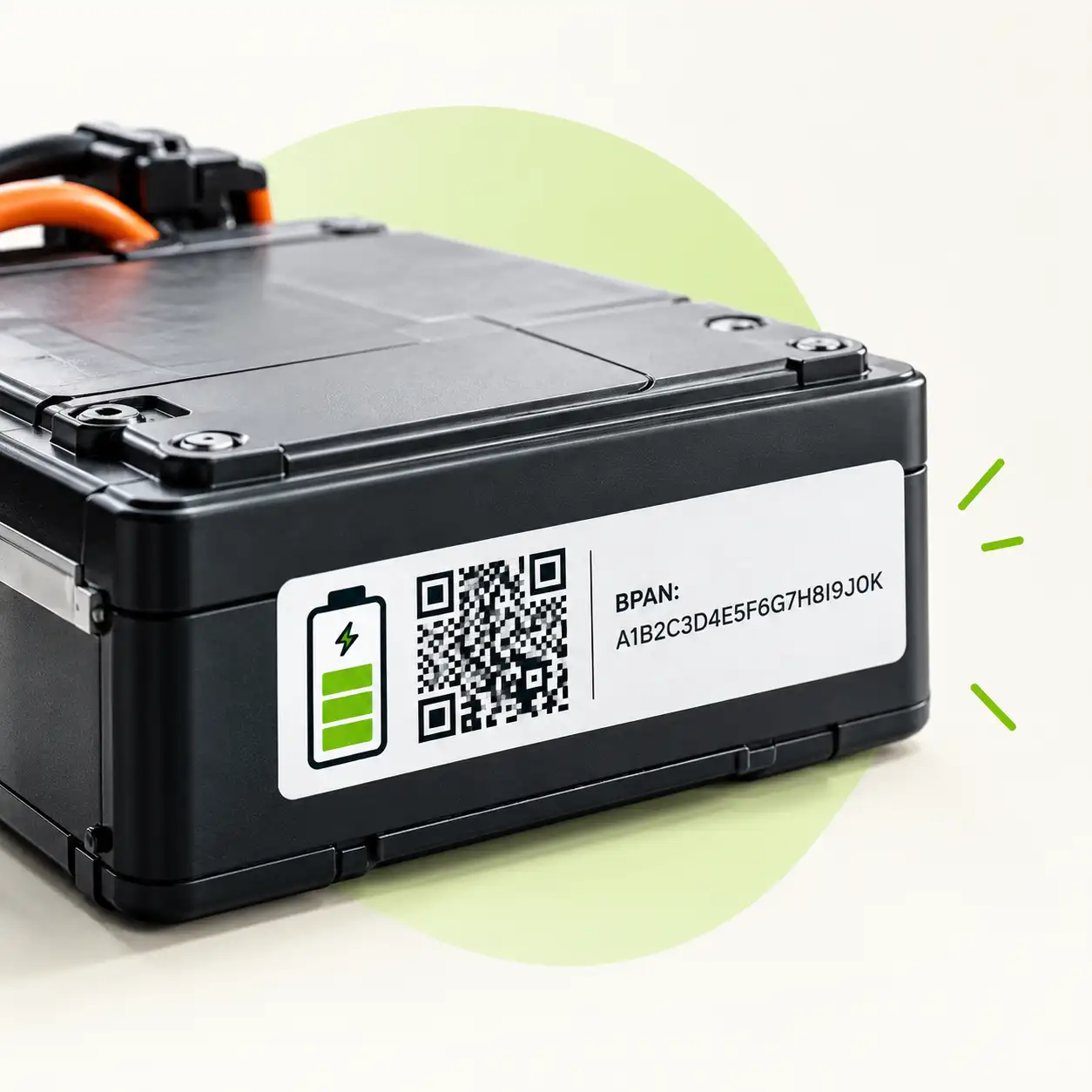
MoRTH's January 2026 draft notification proposes a 21-character unique identifier (BPAN) for every EV battery and industrial battery above 2 kWh. Producers will be required to upload live battery data to a government portal. The BPAN will be linked to VAHAN, enabling end-to-end tracking from factory to authorised recycler - the first time India will have a nationally auditable battery chain of custody.
Why BPAN Creates New Businesses
- State-of-Health (SoH) testing and certification for used EVs and second-life batteries - a mandatory pre-transaction service
- BPAN compliance software for the hundreds of small pack assemblers and importers who lack in-house capability
- Used-EV marketplaces built on verified battery health reports, enabling trust in the secondary market
- Fleet telematics for delivery and e-rickshaw operators - operational efficiency plus regulatory compliance
- Battery data products for lenders and insurers to price risk accurately and reduce NPAs
Service, Spares & Skills
India's EV after-sales infrastructure is critically underdeveloped relative to the fleet size it must support. Most Industrial Training Institutes and polytechnics continue to teach ICE engine servicing. Only 18 of 161 automotive qualification packs are EV-related. There is a severe shortage of certified high-voltage technicians, functional EV labs, and qualified trainers - a skills gap that will widen as the fleet doubles over the next two years.
Multi-Brand EV Repair Workshops
Especially for 2W and e-rickshaws. With ~700 e-3W brands, brand-authorised service is impossible - creating demand for independent multi-brand workshops in every district.
Motor & Controller Rewinding
Huge unorganised demand for motor and controller repair in the e-3W segment. A skilled rewinding shop in a cluster city can serve hundreds of operators monthly.
Spare Parts Distribution
A spare-parts distribution network for the ~700 e-3W brands is almost entirely absent. A well-organised regional distributor captures both margin and market data.
EV Technician Training
Short certification courses (3–6 months) for EV diagnostics and high-voltage safety command premium fees and create a recurring student pipeline.
End-of-Life - the Circular Economy
India's Battery Waste Management Rules place full Extended Producer Responsibility (EPR) on manufacturers and importers: every battery sold must be collected and recycled. Producers must purchase EPR certificates from authorised recyclers through the CPCB portal. High material-recovery targets for EV batteries are due around FY2026-27, and from FY2027-28, new batteries must incorporate minimum recycled content of lithium, cobalt, and nickel. A dedicated ₹1,500 crore Ministry of Mines scheme provides capital support for recyclers entering the sector.
Collection & Reverse Logistics
The easiest entry point. Battery collection networks are the foundation of every EPR compliance strategy - and no one has built one at scale yet.
Dismantling & Black-Mass Production
Processing spent packs into black mass - the intermediate material containing lithium, cobalt, and nickel - for sale to hydrometallurgical refiners.
Second-Life Storage Products
Repurposing retired EV packs into solar storage, telecom backup, and inverter systems. Extends asset value and delays full recycling cost.
EPR Compliance Consulting
Importers and small producers lack in-house expertise to navigate EPR registration, certificate procurement, and annual filing requirements.
Cross-Cutting Layer
The Compliance Layer: Selling Certainty
Every new regulation creates a mandatory service business. India's EV regulatory environment is rapidly expanding - encompassing vehicle homologation, battery safety, EPR obligations, localisation audits, and traceability requirements - and the target customers are hundreds of small OEMs and pack assemblers who cannot afford full in-house compliance teams. Selling regulatory certainty is a high-margin, recurring, and scalable business with extremely low capital requirements.
Homologation Support
Helping small OEMs navigate ARAI and ICAT testing - from documentation preparation to test scheduling and failure remediation.
Battery Safety Compliance
AIS-156 certification and fire-safety norm compliance for pack assemblers and vehicle manufacturers entering new segments.
EPR Registration & Filing
End-to-end management of EPR obligations under Battery Waste Management Rules, including certificate procurement from the CPCB portal.
Localisation Audits
Verifying and documenting domestic value-addition for PLI-Auto and PM E-DRIVE subsidy eligibility - a mandatory annual exercise.
BPAN & Import Documentation
Battery Pack Aadhaar compliance setup for pack makers, plus import documentation management for cell and component importers.
Choose Your Ground
Opportunity Map: Capital vs. Complexity
Not every opportunity requires deep pockets or advanced technology. The matrix below maps business ideas across two axes - capital requirement and technical complexity - to help investors and entrepreneurs identify their natural entry point. The most defensible long-term plays often start in the lower-left quadrant and climb diagonally over time.
↑ Higher technical complexity
- compliance and homologation consulting
- SoH testing and certification
- fleet and charging software SaaS
- battery pack assembly
- wiring harnesses
- chargers
- controllers
- battery leasing and swapping
- second-life storage products
- EV repair and motor rewinding
- charger installation and AMC
- battery collection for recyclers
- e-rickshaw bodies and sheet metal
- training institutes
- battery recycling hydrometallurgy
- magnet manufacturing
- cell materials
The Geography
The Tier-2 / Tier-3 Advantage
The received wisdom in Indian business is that markets begin in metros and migrate outward. In EV, the dynamic is inverted. The largest EV state is Uttar Pradesh, driven overwhelmingly by e-rickshaws in cities like Varanasi, Agra, Kanpur, and Lucknow. The users are individual drivers and small fleet owners, not technology-forward consumers. Their priorities are downtime minimisation, affordable finance, and accessible spare parts - not app interfaces or OTA updates.
The Winning Formula
Local presence + reliable service + easy EMI
This combination creates a defensible, relationship-driven business that large, centralised operators cannot easily replicate - especially in cities where trust is transactional and word-of-mouth is the primary marketing channel.
Why Big Brands Leave Gaps
- Metro-focused OEMs lack Tier-2/3 service infrastructure
- National NBFCs avoid small-ticket, unorganised borrowers
- No organised battery network exists east of Kolkata
- Spare-parts supply for regional brands is fragmented
- Training and certification is metro-concentrated
Each of these gaps is a business waiting to be built - by someone with local roots and operational discipline.
Reality Check
Risks to Watch
The opportunity is real, but the risk landscape is material. Investors and operators entering India's EV back-end economy must model these structural risks explicitly - not treat them as tail events. Several of them are already manifesting and have caused visible disruption in the past 18 months.
China Dependence
Cells, magnets, and power electronics chips remain import-dependent from China. Export controls, applied in 2025, have already triggered production halts at Indian OEMs. This is a live, recurring risk - not a theoretical one.
Subsidy Exit
2W/3W demand must now stand on unit economics without purchase subsidies. Businesses that depended on subsidy-inflated volumes will face demand normalisation in FY2027.
Price Wars
GST reductions in September 2025 narrowed the petrol-vs-EV total-cost-of-ownership gap. Combined with falling Chinese EV prices, margin pressure across the value chain is intensifying.
Quality & Safety
One high-profile fire or battery failure can destroy a small brand's reputation overnight. Quality management systems are non-negotiable, not optional, for any pack assembler or charger maker.
Technology Shifts
Sodium-ion, LFP chemistry improvements, and new motor architectures can rapidly change the cost and performance benchmarks. Inventory and tooling bets on today's dominant technology carry obsolescence risk.
Unorganised Competition
Non-compliant, low-cost players undercut on price across components, chargers, and repair services. Competing on compliance and reliability requires deliberate positioning and customer education.
The Framework
How to Pick Your Entry Point
With dozens of viable opportunities across eight layers, prioritisation is the hardest strategic task. The following five-question framework helps operators, MSMEs, and investors identify entry points that match their capital position, risk tolerance, and local capabilities. The goal is not to find the largest opportunity, but to find the most defensible, recurring, and scalable one given your starting position.
Who pays?
Identify the ultimate payer: OEM, fleet operator, individual driver, lender, or government. Each has different credit risk, payment cycles, and relationship requirements. Government and OEM buyers pay slower but are more reliable.
Is it recurring?
Service contracts, AMC, battery leasing, compliance filings, and SaaS subscriptions repeat annually. One-time manufacturing sales require constant new customer acquisition. Prioritise recurring revenue structures where possible.
Does a new rule force demand?
EPR obligations, BPAN compliance, and localisation thresholds create mandatory buyers who cannot opt out. Regulatory-driven demand is more predictable than market-driven demand.
Can I start small and climb?
The best entry points have a natural upgrade path: wiring harness → battery pack → BMS integration → full motor. Starting simple builds OEM relationships and quality credentials before committing to higher-complexity products.
Is there a local trust gap?
Tier-2/3 service, finance, and battery network gaps are the easiest wins for locally rooted operators. Geography and relationships are a moat that national players cannot easily replicate.
The Takeaway
Key Takeaways
India's EV market is at an inflection point - large enough to sustain real businesses, still early enough for new entrants to claim defensible positions. The opportunity is not in the headline products. It is in the infrastructure, services, finance, data, and compliance layers that every EV ecosystem requires to function.
Scale & Momentum
24.5 lakh units sold in FY2026, growing ~50% in calendar 2026. Mostly 2W and 3W - India's EV story is a mass-market story.
Policy Has Pivoted
Subsidies are shifting to e-trucks, buses, and infrastructure. Cost reduction, life extension, and risk mitigation now drive value in the 2W/3W market.
Eight Layers, Not Three
The best small-business plays are in components, service, finance, data, compliance, and recycling - not in cars, batteries, and chargers alone.
Forced Demand Is Real
EPR, Battery Pack Aadhaar, and localisation rules create mandatory buyers - insulating compliant businesses from pure market cyclicality.
Tier-2/3 Is the Frontier
Uttar Pradesh leads EV registrations. East India has dense e-rickshaw clusters with no organised back-end. Local presence beats national scale here.
The EV gold rush isn't in selling EVs. It's in everything EVs need.
References
Sources & Further Reading
This research deck draws on a range of industry, regulatory, and financial sources compiled through September 2026. All market data should be independently verified before informing investment or operational decisions.
Market Data & Sales
- Autocar Professional: FY2026 EV Sales Analysis (April 2026)
- Flash Finance / VAHAN: EV Sales August 2026
- Business Standard & Autocar Pro: PM E-DRIVE Extension (Aug 2025)
- IndexBox / IESA / JMK Research: Battery Cell Demand and Imports (2026)
- Mordor Intelligence, Dataintelo, IMARC: E-Rickshaw & Battery Swapping Market
Supply Chain & Finance
- ICRA, Outlook Business, Forbes India, Rare Earth Exchanges: Rare-Earth Magnets (2025–26)
- IEEFA: EV Component Localisation (2026); EV Financing Report (Feb 2026)
- Outlook Business: Residual-Value Credit Risk (Sept 2026)
Policy & Regulation
- MoRTH Draft Battery Pack Aadhaar Guidelines (Jan 2026)
- CPCB Battery Waste Management Rules
- Gravita India, Respose India: Recycling Sector (2026)
Infrastructure & Skills
- MeraEV, Bolt.Earth, ORF: Charging Infrastructure (2026)
- Climate Policy Initiative: EV Skills and Jobs Outlook
- CEA: Grid Storage Projections 2031-32
Want to spot opportunities like these with AI?
Learn to research markets, analyse data and work with AI from your phone in our 2-hour live online workshop.
Reserve your seat, ₹299₹999Sun, 22 Nov, 11:00 AM · Live online, in Hindi
Use AI in your business? Talk to us